
Budgeting doesn’t have to be boring or restrictive. A good budget isn’t about cutting everything out — it’s about gaining control, clarity, and confidence over your money.
If you’ve ever started a budget and given up a few weeks later, you’re not alone. But with the right strategy, budgeting can become a habit you actually enjoy.
Here’s how to build a budget that works in real life — even if your income varies or your expenses feel unpredictable.
Step 1: Know Your Numbers
Before you create a budget, you need to understand where your money is currently going.
Track your spending for at least a month:
- Use an app like PocketSmith, Emma, or Money Dashboard
- Review your bank and credit card statements
- Categorise expenses (e.g., groceries, rent, travel, subscriptions)
Pro tip: Look for patterns — where are you overspending without realising it?
Step 2: Calculate Your Income (After Tax)
Use your net (take-home) pay, not your gross salary. If your income fluctuates:
- Average the last 3 months of earnings
- Or use your lowest-earning month to stay conservative
This gives you a realistic and sustainable starting point.
Step 3: List Your Essential Expenses
These are your non-negotiables:
- Rent or mortgage
- Utilities
- Food and transport
- Debt repayments
- Insurance
Subtract these from your income. The remainder is what you can use for flexible spending and financial goals.
Step 4: Set Spending and Saving Goals
This is where you personalise your budget:
- Set limits for non-essentials like dining out, entertainment, or subscriptions
- Assign a portion of your budget toward savings or debt repayment
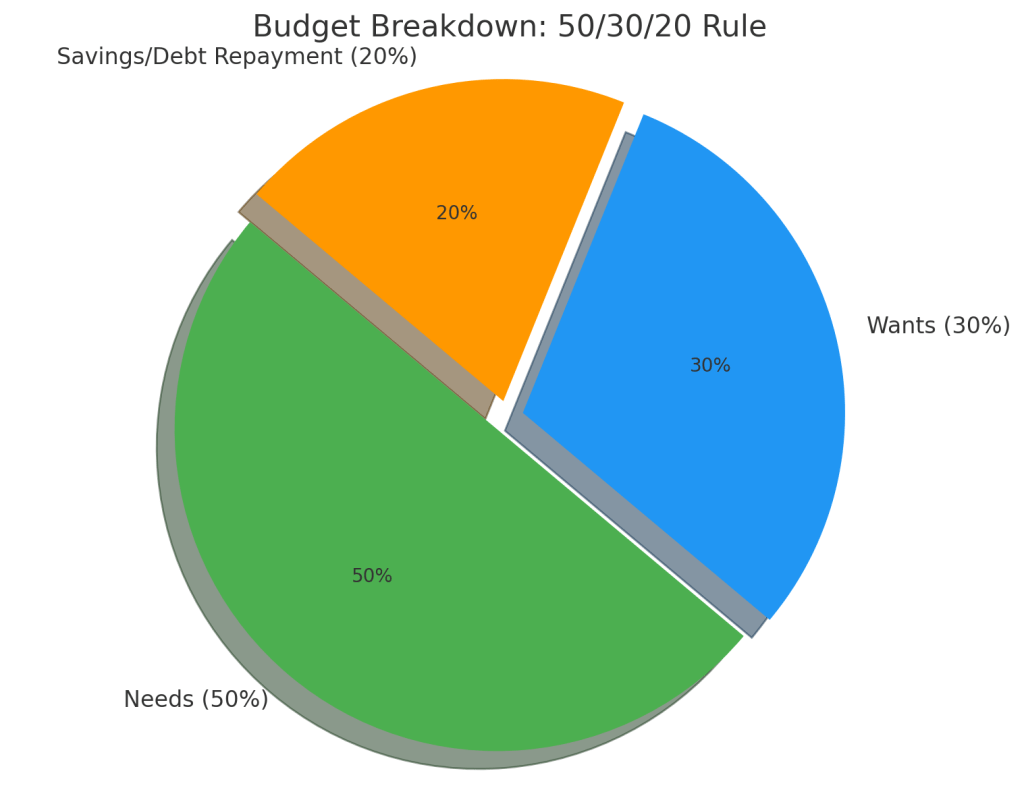
Use the 50/30/20 Rule as a rough guide:
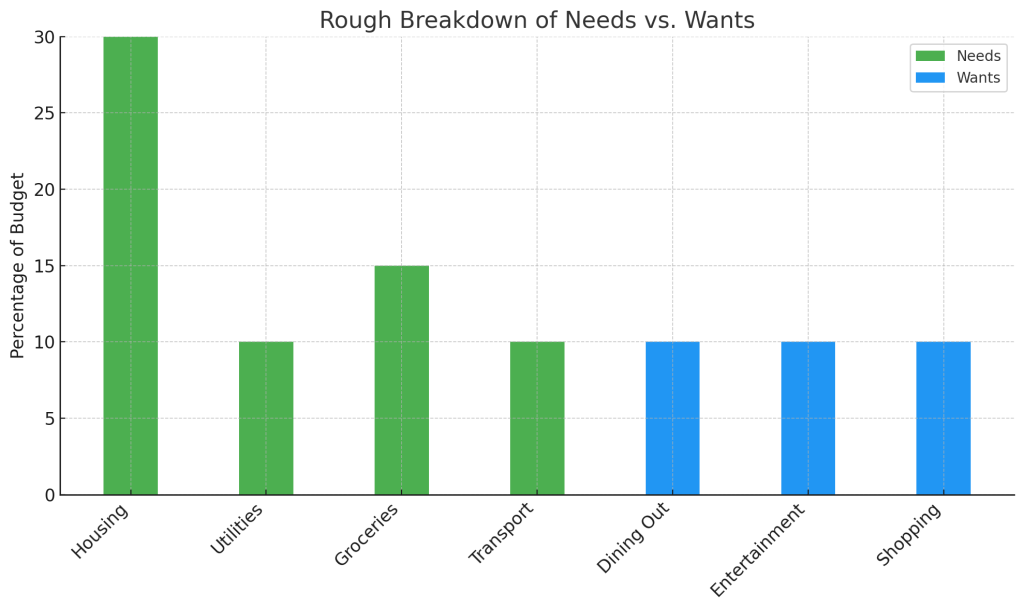
Note:
This graph adds up to 95% on purpose. The remaining 5% is left as a buffer — a bit of playroom in your budget. Life is unpredictable, and building in a small margin helps absorb surprises without derailing your progress.
This flexibility makes your budget more sustainable long-term, especially when you’re just starting out or adjusting to a new system.
But don’t feel restricted — adjust based on your own situation.
Step 5: Choose a Budgeting Method That Works for You
Different people thrive with different approaches. Try one of the following:
- Zero-based budgeting: every pound is assigned a job
- Envelope method: physical or digital categories for spending
- Pay yourself first: save before you spend anything else
Try a method for one full month, then evaluate and adapt as needed.
Step 6: Review and Adjust Weekly
Many people abandon their budgets because they don’t review them.
Instead:
- Do a quick check-in once a week (15 minutes is enough)
- Ask: Did I stick to my categories? What worked or didn’t?
- Make small adjustments based on what’s happening in your life
Your budget is a living system — not something you set and forget.
What Helped Me Finally Understand Budgeting
I’ll be honest — I used to think budgeting was boring. It felt like spreadsheets, restrictions, and rules I didn’t want to follow. I thought it meant cutting out everything I enjoyed.
But once I actually tried it, I realised budgeting was the exact opposite.
It didn’t take long to see the benefits. I could finally see:
- Where my money was going
- Where I could cut back (without feeling deprived)
- How much I could afford to put toward paying off debt
That last one was huge.
Once I had a clear budget, I started using the snowball method — focusing on my smallest debt first while making minimum payments on the rest. Every time I paid something off, I’d roll that amount into the next debt.
And because I had a handle on my wants vs. needs, I could do it without panic or burnout.
Final Thoughts: Budgeting Means Freedom
A good budget doesn’t limit your life — it opens it up.
When you manage your money intentionally, you gain:
- Control over your future
- Less stress around spending
- The ability to save for what truly matters
Start small. Stay consistent. And remember: budgeting is a skill you build, not something you get perfect overnight.
 Pennywise Path
Leave a comment