Paying off debt often starts with a bang — a spreadsheet, a plan, and a big burst of energy. But a few moPaying off debt isn’t just a financial challenge — it’s a mental one. There are times during your debt-free journey when it feels like nothing is changing, even though you’re trying your hardest.
This is what many call debt fatigue — a very real emotional burnout that can derail your progress if you’re not prepared for it.
Let’s look at why motivation fades during long repayment periods, and what you can do to keep going — even when it feels like you’re stuck.
The Psychology Behind Debt Fatigue
Paying off debt takes time — often years. And when interest keeps piling up and your balance doesn’t budge, it’s easy to feel discouraged.
This ties into what I discussed in The Psychology of Spending: Why Small Wins Matter.
We’re wired for instant gratification. But paying off debt? That’s delayed gratification. And when the reward is months (or years) away, our brains may rebel.
3 Common Reasons You Lose Motivation During Debt Repayment
1. You Stop Seeing Progress
In the early days, every payment feels like a victory. But over time, especially with high-interest debt, your balance may not drop as quickly — making it feel like you’re going nowhere.
Try this instead:
Track how much interest you’re avoiding — not just how much debt you’ve paid off. Those invisible wins are real progress, too.
2. Your Repayment Strategy Doesn’t Match Your Personality
If you’re using a method that doesn’t suit your mindset, it will wear you down.
- Some people need fast wins and emotional momentum.
- Others prefer knowing they’re saving the most money long-term.
If your current strategy feels exhausting, switch it up.
Compare Snowball vs. Avalanche: Which One Keeps You Motivated?
3. Your Budget Is Too Strict
A super-tight budget might speed up your payoff, but it can also burn you out.
Constantly denying yourself little joys leads to resentment — and that’s when many people give up.
Solution:
Build in small, guilt-free rewards. Hit a milestone? Celebrate with a movie night, a long walk with no money talk, or a budget-friendly treat.
How to Stay Motivated on a Long Debt Journey
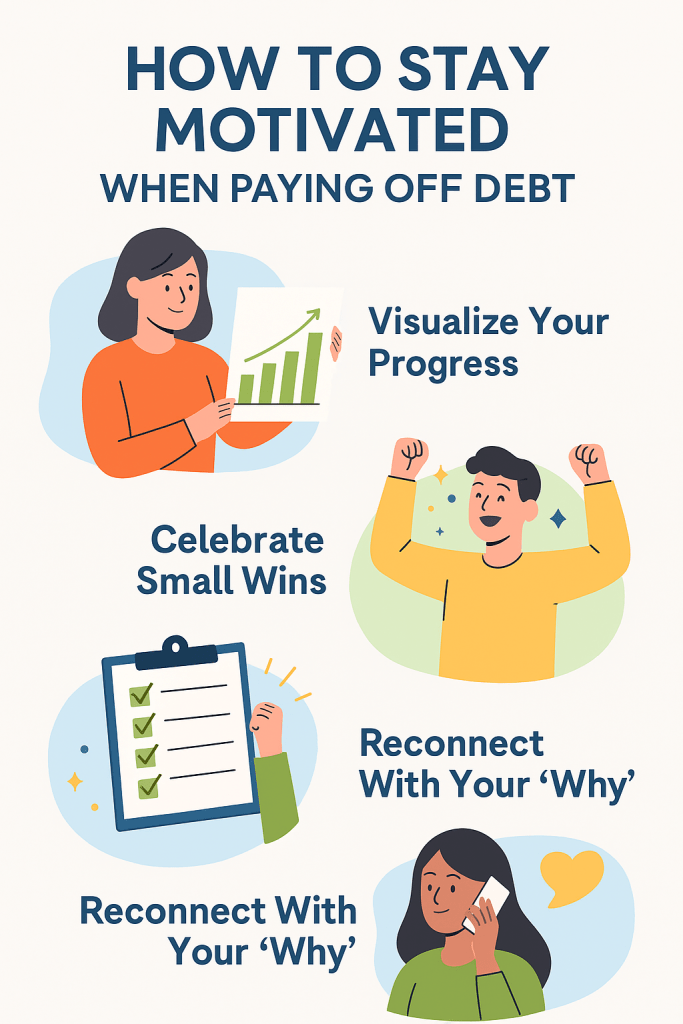
1. Visualise Your Progress
Plain spreadsheets are useful, but they don’t give you that emotional payoff.
Try:
- Debt payoff charts
- Thermometer-style trackers
- Monthly net worth snapshots
When you see the numbers improving — even slowly — it gives you a reason to keep going.
2. Celebrate Every Small Win
- Paid off one credit card? 🎉 Celebrate.
- Made every payment on time this year? That’s a win.
These small victories add up and build long-term momentum.
This ties back to the idea in my post on small wins: Motivation grows with visible progress.
3. Reconnect With Your “Why”
Why are you doing this? Write it down. Keep it where you can see it.
Your “why” might be:
- To live without financial stress
- To be a good financial role model for your kids
- To buy a home or build wealth in the future
Debt freedom is hard — but worth it when you stay connected to your purpose.
4. Be Flexible, But Stay Accountable
If a strategy stops working, change it. But don’t quit.
Set regular check-ins:
- Weekly or monthly budget reviews
- Quick “progress audits”
- Talk it over with a partner or friend
Adjust when needed — but keep your eyes on the goal
Final Thoughts
Losing motivation during debt repayment is normal — but not permanent. The key is to shift from intensity to consistency. By building in small wins, choosing a strategy that fits your personality, and staying emotionally connected to your goal, you can finish what you started.
If you haven’t already, check out:
- Snowball vs. Avalanche to see which method fits your mindset.
- The Psychology of Spending to better understand your emotional patterns with money.
You’ve got this — and I’ll be right here to walk that path with you.
 Pennywise Path
Leave a comment